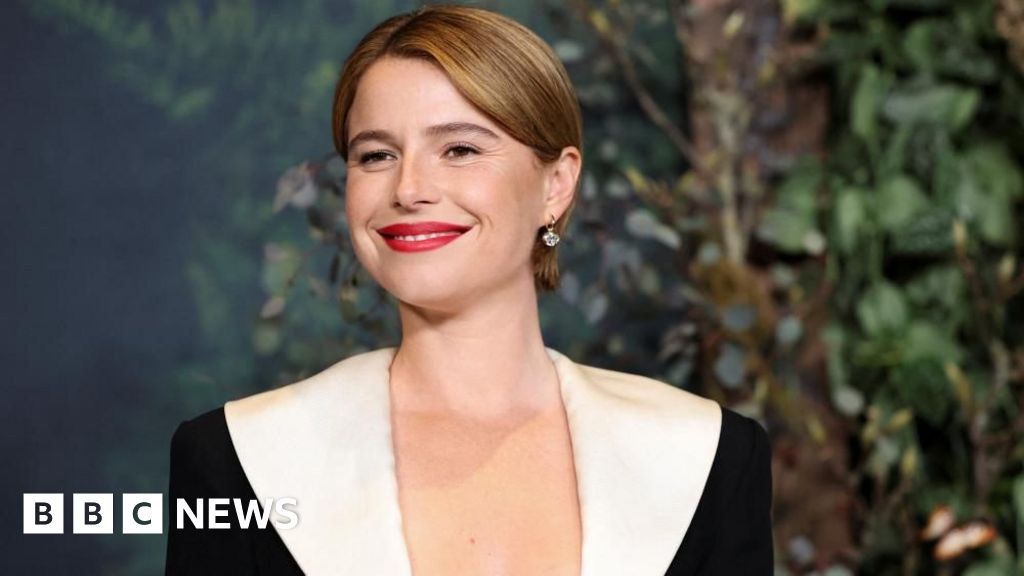
I remember the first time I heard about Maggie O’Farrell’s novel Hamnet. A friend pressed it into my hands during lockdown, saying it would break me in the best way. She wasn’t wrong. The book reimagines the life of William Shakespeare’s family, centering on his wife Agnes and the devastating loss of their son Hamnet, whose death in 1596 may have inspired one of the greatest plays ever written. Fast-forward to now, and Chloé Zhao’s film adaptation has hit screens, turning that quiet heartbreak into something cinematic and profound. At the heart of it all is Jessie Buckley, delivering what many are calling a career-defining performance as Agnes. Buckley herself has admitted to feeling “overwhelmed” by the role—and honestly, after seeing the film, I get it completely.
The Origins: From Bestselling Novel to Screen
Maggie O’Farrell’s 2020 novel Hamnet took the literary world by storm, winning the Women’s Prize for Fiction and captivating readers with its intimate portrait of grief.
The story shifts focus away from the Bard himself, instead exploring Agnes (often historically known as Anne Hathaway) as a fierce, intuitive woman connected to nature—a healer and mother whose world shatters when her 11-year-old son dies.
O’Farrell’s prose weaves historical fact with fiction, imagining how this personal tragedy fueled Shakespeare’s Hamlet just years later.
Chloé Zhao, fresh off her Oscar win for Nomadland, co-adapted the screenplay with O’Farrell, bringing a grounded, emotional depth that feels true to the book’s spirit.
Jessie Buckley’s Emotional Journey into Agnes
Jessie Buckley has always struck me as one of those actors who disappears into roles, bringing a raw intensity that’s impossible to fake.
In Hamnet, she plays Agnes as a woman of quiet strength and wild spirit—someone villagers whisper about as witch-like, yet deeply loving.
Buckley told interviewers she felt “totally overwhelmed” diving into this character, describing Agnes as embodying “the full story of what I understand a woman to be.”
The filming process pushed her into new territory, exploring motherhood, loss, and resilience in ways that mirrored her own life—she became a mother shortly after wrapping.
Paul Mescal as the Young Shakespeare: A Perfect Pairing
No stranger to emotionally charged roles after Normal People and Aftersun, Paul Mescal brings a tender vulnerability to William Shakespeare.
Here, he’s not the iconic playwright yet—just a young Latin tutor from Stratford, falling deeply in love with the older, enigmatic Agnes.
Their chemistry crackles on screen, from passionate early romance to the strained grief that tests their bond.
Mescal has spoken about how the role felt like a full-circle moment, honoring Shakespeare’s humanity over his legend.
Chloé Zhao’s Vision: Nature, Grief, and Catharsis
Chloé Zhao’s direction shines in Hamnet, blending her signature naturalistic style with period drama.
She captures 16th-century England beautifully—lush forests, humble homes, the bustle of London theater—while keeping the focus intimate.
The film’s emotional peak comes in a recreated Globe Theatre scene, where Agnes confronts her husband’s play, leading to a cathartic release many critics call transcendent.
Zhao collaborated closely with O’Farrell, ensuring the adaptation honors the novel’s feminist lens on Agnes.
Critical Acclaim and Early Awards Buzz
Since premiering at Telluride and winning Toronto’s People’s Choice Award, Hamnet has earned rave reviews—86% on Rotten Tomatoes.
Critics hail it as “devastating yet beautiful,” with Buckley often singled out for a “volcanic” and “heroic” performance that’s a lock for Best Actress nods.
Mescal earns praise too, positioning him in the supporting actor race, while Zhao eyes another directing nomination.
Five-star reviews from The Telegraph and The Times call it a potential Oscar frontrunner, especially for its timely exploration of loss.
The Supporting Cast: Depth in Every Role
Emily Watson delivers a nuanced turn as Agnes’s mother-in-law, adding familial tension.
Joe Alwyn plays Agnes’s brother Bartholomew, a steady presence amid chaos.
Young Jacobi Jupe breaks hearts as Hamnet, capturing innocence lost too soon—his scenes with twin sister Judith are unforgettable.
The ensemble feels like a real family, laughing and grieving together on set.
Themes of Love, Loss, and Legacy
At its core, Hamnet asks how we endure unimaginable grief and transform it into something enduring.
It portrays marriage as a living, breathing thing—joyful, strained, resilient.
The film subtly links personal tragedy to artistic creation, without overshadowing Agnes’s story.
In a world still healing from collective losses, its message resonates deeply.
Buckley and Mescal: Behind-the-Scenes Bonding
Buckley and Mescal, both Irish talents on the rise, built genuine trust through workshops, including tantric exercises for “kinetic” connection.
They describe the set as light despite heavy material—lots of laughter amid tears.
Buckley calls it “alive,” while Mescal praises Zhao’s intuitive guidance.
Their shared scenes feel electric, rooted in mutual respect.
Release and Where to Watch
Hamnet had a limited U.S. release in late November 2025, going wide in December, with UK cinemas on January 9, 2026.
It’s playing in theaters now—check local listings or streaming soon on platforms like Peacock.
The teaser and full trailers are stunning; search “Hamnet official trailer” for a glimpse.
If you’re in awards season mode, this one’s essential viewing.
Comparison: Book vs. Film Adaptation
| Aspect | Novel by Maggie O’Farrell | Film by Chloé Zhao |
|---|---|---|
| Structure | Dual timelines, toggling past and present | Chronological for clearer emotional arc |
| Focus | Heavily on Agnes’s inner world | Balanced between Agnes and William |
| Plague Element | Detailed, metaphorical flea journey | Streamlined but visceral |
| Ending | Poetic, introspective | Theatrical climax at the Globe |
| Length/ Pace | Lyrical, immersive prose | Visual, sensory storytelling |
The film stays faithful while enhancing cinematic elements—like breathtaking nature shots mirroring Agnes’s spirit.
Pros and Cons of Hamnet as an Awards Contender
Pros:
- Stellar lead performances, especially Buckley’s frontrunner status.
- Timely themes of grief and resilience.
- Prestigious pedigree: Zhao directing, Spielberg producing.
- Strong festival buzz and critical consensus.
Cons:
- Some found it emotionally manipulative or overly tear-jerking.
- Period drama competition is fierce this year.
- Subtlety in places might not wow all voters.
- Runs the risk of being “too sad” for broader appeal.
Overall, the pros far outweigh, making it a strong Best Picture hopeful.
People Also Ask
What is Hamnet about? It’s a fictionalized story of William Shakespeare’s family, focusing on his wife Agnes and the death of their son Hamnet from plague, exploring how grief shaped their lives and possibly inspired Hamlet.
Is Hamnet based on a true story? Partially—Hamnet Shakespeare did die at age 11 in 1596, and Hamlet was written soon after. The family dynamics and Agnes’s character are imagined by O’Farrell.
Who stars in the Hamnet movie? Jessie Buckley as Agnes, Paul Mescal as William Shakespeare, with Emily Watson, Joe Alwyn, and Jacobi Jupe as Hamnet.
When is Hamnet released in theaters? Limited U.S. release November 2025, wide December; UK January 9, 2026.
Will Hamnet win Oscars? Early buzz is strong—Buckley is a Best Actress favorite, with potential nods for Picture, Director, and more at the 2026 Oscars.
FAQ
How does the film differ from the book? The movie follows a linear timeline for better flow, emphasizes visual poetry, and expands the Globe Theatre finale for catharsis, while staying true to the novel’s emotional core.
Is Hamnet a sad movie? Yes, it’s deeply emotional and deals with child loss, but it balances despair with love, beauty, and hope—many leave feeling moved rather than depressed.
Where can I watch the Hamnet trailer? Official trailers are on YouTube via Focus Features—search “Hamnet official trailer” for the latest.
Why is Jessie Buckley tipped for an Oscar? Her portrayal of Agnes is raw, physical, and layered—critics call it “magical” and “for the ages,” marking a peak in her acclaimed career.
What inspired Maggie O’Farrell to write Hamnet? She was fascinated by the footnote of Shakespeare’s son’s death and wanted to reclaim Agnes’s story, giving voice to the women behind great men.
In the end, Hamnet isn’t just about Shakespeare—it’s about the quiet heroes in history, the ones who hold families together through storms. Jessie Buckley’s overwhelmed reaction makes perfect sense; this role demands everything, and she gives it. If you haven’t seen it yet, do yourself a favor and catch it in theaters. It’s the kind of film that lingers, reminding us how art helps us process the unbearable. And who knows—come March 2026, we might be watching Buckley on that Oscar stage, finally getting her due.