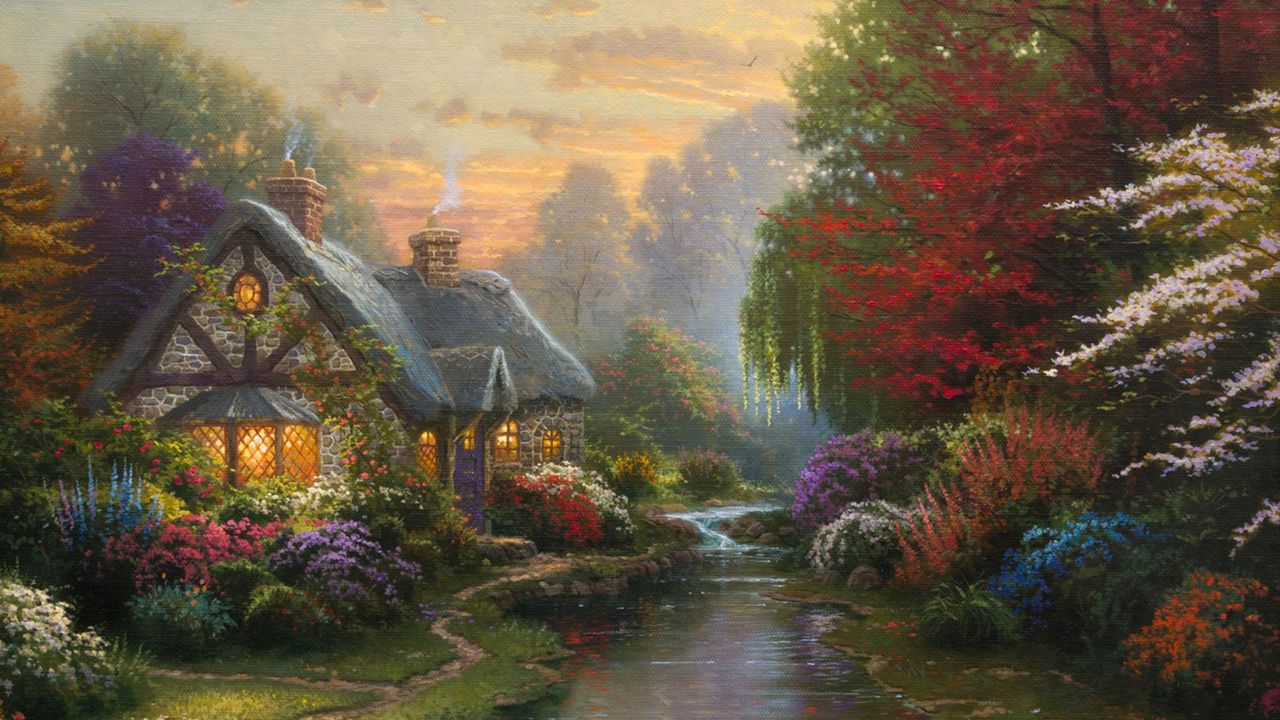
Thomas Kinkade’s glowing cottages and serene landscapes once hung in millions of American homes, offering a soft escape from everyday chaos. Yet to many in the art world, those same images felt empty and overly sweet, like visual comfort food that left you unsatisfied. This sharp divide—between heartfelt popularity and harsh criticism—mirrored deeper tensions in American culture during the late 20th and early 21st centuries.
I remember wandering into a mall gallery back in the early 2000s, drawn by the warm lights spilling from those framed scenes. It felt inviting, almost magical. But then I’d read reviews calling them kitsch, and I’d wonder: Was I missing something profound, or were the critics just out of touch? Kinkade’s story isn’t just about pretty pictures; it’s about who gets to decide what counts as “real” art, and why his work struck such a nerve on both sides.

Who Was Thomas Kinkade?
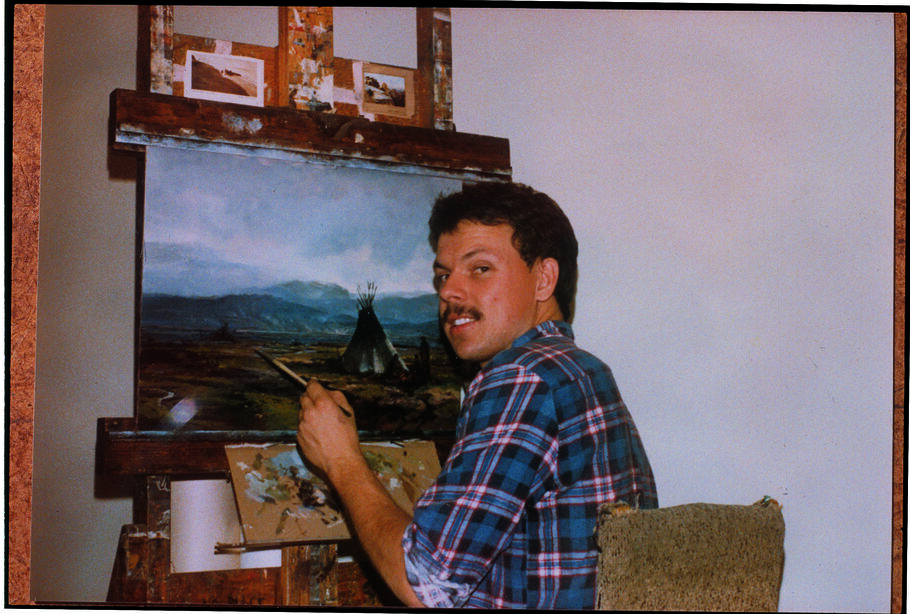
Thomas Kinkade grew up in Placerville, California, a small town that shaped his nostalgic visions.
Raised by a single mother after his father’s absence and struggles, young Kinkade found solace in sketching and dreaming of idyllic worlds. He studied at the Art Center College of Design and briefly worked on animated films like Fire and Ice, but soon pivoted to his signature style: luminous, peaceful scenes he called “Painter of Light” (a phrase he trademarked).
Kinkade’s breakthrough came in the 1980s and 1990s when he shifted from gallery originals to mass-produced prints. His company, Media Arts Group, exploded, reportedly generating over $100 million annually at its peak. Prints appeared on everything from plates to puzzles, and dedicated galleries popped up in malls nationwide.
The Appeal: Why Millions Loved His Work
Kinkade’s paintings offered a deliberate retreat from reality.
In an era of rising urban stress, 9/11 anxieties, and cultural shifts, his glowing cottages symbolized safety, faith, and simpler times. As a born-again Christian, he infused his art with spiritual undertones—light representing God’s presence—resonating deeply with evangelical audiences.
Fans often described the works as uplifting. One collector shared how a Kinkade print brought calm during tough times, like a window to a better world. At one point, estimates suggested his art hung in one in every 20 American homes. It wasn’t about elite appreciation; it was personal comfort.
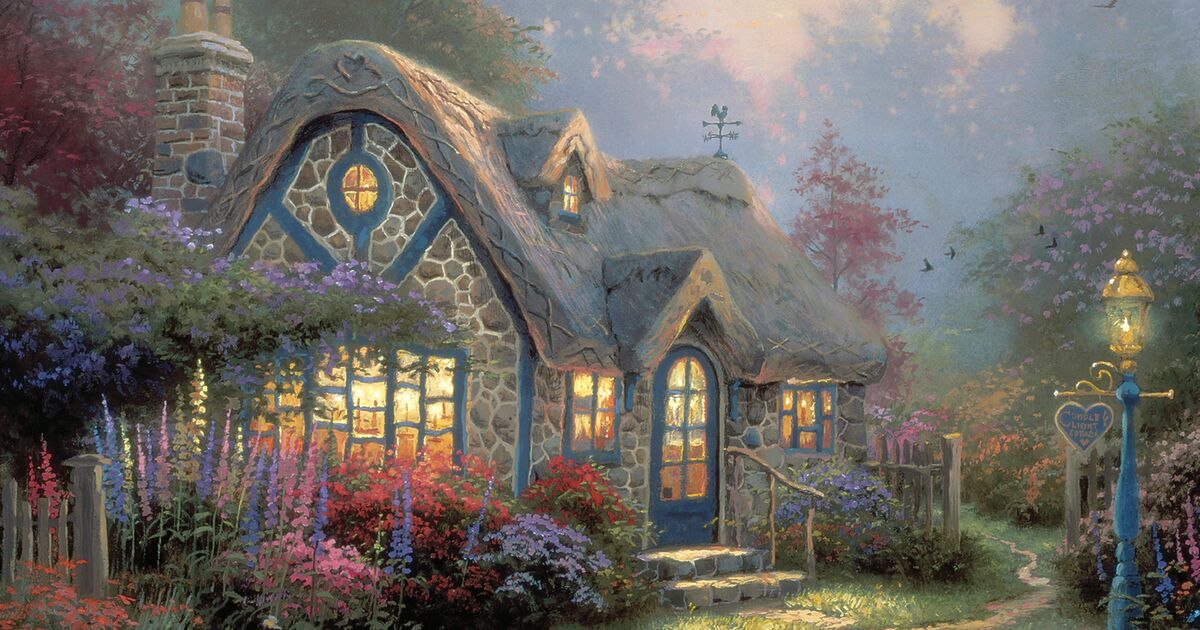


Pros of Kinkade’s Art for Fans
- Emotional comfort: Evokes peace and nostalgia.
- Accessibility: Affordable prints brought “art” to everyday homes.
- Inspirational themes: Subtle Christian symbolism without preachiness.
- Beauty in simplicity: Focus on light and nature as sources of joy.
The Backlash: Why Critics Called It ‘Banal and Hollow’
Art critics didn’t hold back.
They saw Kinkade’s work as overly sentimental, lacking depth or challenge. Joan Didion described his cottages as “insistently cozy” yet “sinister,” like traps from a fairy tale. Others, like Charlotte Mullins, labeled it “schmaltzy pastiches” of Disney scenes—sugary and forgettable.
The mass-production model drew fire too: Prints were factory-made, then hand-highlighted by assistants, blurring lines between original and reproduction. Critics argued this commodification cheapened art, turning it into mall merchandise.
Christopher Knight of the Los Angeles Times called it “bad art with outsized impact,” while Susan Orlean bet Kinkade $1 million his work wouldn’t enter major museums (she won).
Common Criticisms
- Lack of substance: Superficial beauty without meaningful commentary.
- Overly idealized: Ignores real-world complexity.
- Commercial overreach: Prioritized profit over purity.
- Kitsch factor: Too sweet, bordering on manipulative.
| Aspect | Fans’ View | Critics’ View |
|---|---|---|
| Subject Matter | Comforting escapism | Escapist denial of reality |
| Use of Light | Divine, uplifting glow | Artificial, overly saturated |
| Production Method | Democratizes art | Devalues authenticity |
| Cultural Impact | Brings joy to millions | Reinforces lowbrow tastes |
The Business Empire and Its Controversies
Kinkade built a savvy empire.
He franchised Signature Galleries, licensed images to La-Z-Boy furniture and Disney, and sold via QVC. It was pioneering—artist as brand, predating today’s collabs.
But cracks appeared. Former gallery owners sued, alleging fraud: They claimed Kinkade’s company pressured investments using Christian faith as bait, then undersold them. Arbitration awarded millions in damages. Bankruptcy followed in the late 2000s.

The Hidden Darkness: A Complex Life
Recent documentaries like Art for Everybody (2025) reveal a tormented side.
Kinkade struggled with alcoholism, separating from his wife Nanette before dying in 2012 at 54 from alcohol and Valium overdose. Erratic behavior—public incidents, allegations of harassment—contrasted his wholesome image.
His family discovered hidden paintings: Dark, abstract works far from his public style, hinting at inner turmoil. It paints a tragic picture—a man craving deeper expression but trapped by his brand.
I can’t help feeling a pang of sadness here. We’ve all got parts we hide, right? Kinkade’s success came at a cost, amplifying a divide between public piety and private pain.
Legacy: Still Dividing Opinions Today
Kinkade’s work endures through Thomas Kinkade Studios, with ongoing licensing.
Yet the debate rages: Symbol of cultural elitism vs. populism? His fans defend him as bringing beauty to the masses; detractors see him as emblematic of anti-intellectualism.
In a polarized America, Kinkade embodied that split—loved by heartland families, dismissed by coastal critics. Perhaps that’s his true impact: Holding up a mirror to our divisions.
People Also Ask
Are Thomas Kinkade paintings worth anything?
Originals and limited editions can fetch thousands, but mass-produced prints hold modest resale value—often $50–$500 depending on condition and rarity. Market softened post-death, but dedicated collectors keep prices steady.
Why is Thomas Kinkade controversial?
Beyond art criticism, controversies involved business practices (fraud allegations), personal life (alcoholism, separation), and perceived exploitation of faith for sales.
Did Thomas Kinkade have children?
Yes, four daughters with his wife Nanette: Merritt, Chandler, Winsor, and Everett.
What caused Thomas Kinkade’s death?
Accidental overdose of alcohol and Valium in 2012, amid struggles with addiction.
Where to buy authentic Thomas Kinkade art?
Official Thomas Kinkade Studios website, authorized galleries, or reputable auction sites like eBay (verify certificates). Avoid unauthorized sellers for fakes.
FAQ
What inspired Thomas Kinkade’s style?
His rural upbringing, Christian faith, and influences like Hudson River School painters. He aimed to capture “God’s light” in everyday scenes.
Why do critics hate Thomas Kinkade?
Many view his work as kitsch—sentimental without intellectual depth—and criticize mass commercialization as antithetical to fine art.
Are there unseen Thomas Kinkade paintings?
Yes, post-death discoveries included darker, more personal works never shown publicly, revealed in documentaries.
How did Kinkade make his paintings glow?
Technique involved layering glazes for luminosity; some prints even had embedded LEDs.
Is Thomas Kinkade art considered kitsch?
Widely yes, by critics—deliberately sentimental and decorative rather than challenging.
Kinkade’s story lingers because it touches something raw: The hunger for beauty in a messy world, and the gatekeeping of who defines it. Whether you see his cottages as hollow escapism or heartfelt havens, they undeniably captured a moment—and divided us in the process. What do you think—banal, or brilliantly comforting?