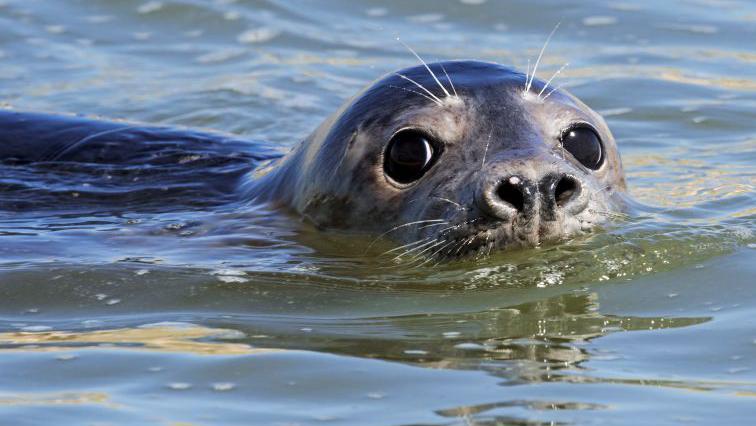
Imagine standing on a windswept beach in Maine, binoculars in hand, watching a group of harbor seals bask in the sun. That’s where Lauren Horstmyer, a college student, found herself a few years back, not just observing but capturing photos that would change how we track these slippery creatures. It wasn’t long before she and her team turned those snapshots into a high-tech tool powered by AI, making seal research feel less like a guessing game and more like detective work. This story isn’t unique—across the globe, students are harnessing artificial intelligence to dive deeper into the world of seals, uncovering secrets about their lives without ever getting wet. And honestly, who wouldn’t want to blend cutting-edge tech with adorable marine mammals? It’s the kind of project that makes you rethink what “studying” really means.
What Are Seals and Why Study Them?
Seals, those flippered wonders of the ocean, belong to a group called pinnipeds, which includes species like harbor seals, grey seals, and the endangered Hawaiian monk seal. They’re not just cute faces on nature documentaries—they’re key indicators of ocean health, munching on fish and getting munched by bigger predators like sharks. Studying them helps us understand everything from climate change impacts to pollution levels in our seas.
But here’s the rub: seals are elusive, often hauling out on remote beaches or ice floes, making traditional tracking a real headache. That’s where students come in, using AI to make sense of the chaos. It’s like giving these young researchers superpowers to protect an animal that’s been around longer than most civilizations.
The Rise of AI in Marine Biology
Artificial intelligence has snuck into every corner of science, but in marine biology, it’s a game-changer for handling massive data sets from photos and videos. Think about it—drones capture hours of footage, and without AI, sifting through it would drive anyone nuts. Students are at the forefront, learning to code models that spot patterns humans might miss, turning raw data into stories about seal survival.

Cal Poly students use drones to study elephant seals – Mustang News
This shift isn’t just efficient; it’s inspiring kids who might otherwise shy away from biology, blending tech skills with a love for the ocean. I remember chatting with a young biologist who said AI made her feel like she was part of something bigger, like saving the planet one algorithm at a time.
Facial Recognition: Giving Seals Their Own IDs
Facial recognition isn’t just for unlocking your phone—it’s revolutionizing how we identify individual seals. By analyzing unique facial patterns, like the shape of eyes or spots on fur, AI software can tell one seal from another without invasive tags. This tech, born from student-led projects, lets researchers track movements and behaviors over time.
From Photos to Insights: The SealNet Story
At Colgate University, professors Krista Ingram and Ahmet Ay teamed up with students like Hailey Orff and Hieu Do to create SealNet, a facial recognition tool trained on thousands of seal photos. They boated out to haul-out sites, snapped pics while keeping disturbance low, then back in the lab, the students fine-tuned the AI to recognize seals like Armani or Petal. The result? A tool that’s 96% accurate, way better than older primate-based software.
Drone Technology Meets AI for Real-Time Monitoring
Drones buzzing over beaches might sound like sci-fi, but they’re a student’s best friend for studying seals without scaring them off. Combined with AI, these flying cameras count seals in seconds, analyzing footage to spot pups or track groups. It’s less invasive than ground surveys, where humans might accidentally cause a stampede into the water.
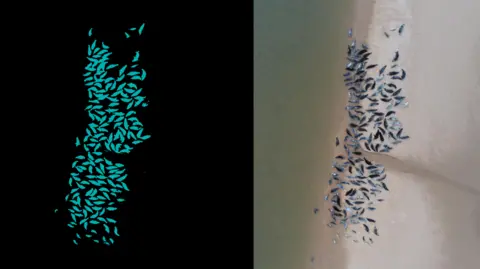
How artificial intelligence is helping students study seals
Picture Claire Stainfield, a PhD student in Scotland, using drones to monitor grey seals at Newburgh beach. Her AI model, trained on drone images, cuts counting time from hours to moments, revealing how tourism affects seal haunts. It’s heartfelt work—Claire worries about these animals like family, and AI helps her protect them smarter.
Counting Seals from the Sky: Efficiency Gains
In projects like the UK’s Norfolk seal monitoring, drones with AI instance segmentation detect over 8,500 seals along coastlines, outpacing manual counts. Students learn to pilot drones and tweak AI algorithms, gaining hands-on skills that blend adventure with data crunching. The emotional payoff? Knowing your work helps conserve species recovering from near-extinction.
Student Challenges in the Field
FruitPunch AI’s challenge invites students to improve SealNet, experimenting with CNN models for better accuracy. Participants, often young engineers, collaborate in teams, turning 10-week sprints into breakthroughs for non-invasive tracking. It’s thrilling— one student shared how nailing a clustering algorithm felt like cracking a code in a spy novel.
Educational Tools Bringing AI to Classrooms
AI isn’t locked in labs; it’s spilling into classrooms, where students use tools like mark-recapture formulas boosted by tech to estimate seal populations. Scholastic Math Magazine breaks it down simply: photograph seals, let AI identify repeats, then crunch numbers for totals. It’s math meets marine life, making abstract concepts tangible.
Interactive Learning with AI Simulations
Platforms like Zooniverse let students annotate seal images for AI training, part of citizen science projects. In Hawaii, NOAA scholar Haley Durbin built an AI algorithm to analyze monk seal videos around aquaculture pens, categorizing behaviors like foraging. Her story? A summer internship turned passion project, showing how AI turns data overload into actionable insights for endangered species.
Math Behind the Magic: Mark-Recapture Explained
Using AI-identified seals in equations like N = (M × C) / R, where M is marked seals, C captured, R recaptured, students estimate populations. For instance, 50 marked, 30 captured with 8 repeats yields about 188 seals. It’s empowering—kids see how algebra saves wildlife, adding a dash of excitement to equations.
Benefits of AI in Student Seal Studies
AI democratizes research, letting students tackle big questions without big budgets. It speeds up data analysis, reduces animal stress, and fosters interdisciplinary skills, from coding to ecology. Emotionally, it’s rewarding; students bond over shared discoveries, like spotting a seal’s migration pattern that hints at warming oceans.
Challenges and How Students Overcome Them
But AI isn’t perfect—bad lighting or clustered seals can confuse models, requiring student tweaks. Data privacy for shared databases is another hurdle, but young minds innovate solutions like better training sets. Humorously, one student joked AI sometimes mistakes a rock for a seal, keeping everyone humble.
Pros and Cons of AI in Seal Research
- Pros: Faster processing, non-invasive, scalable for large areas, engages students in tech.
- Cons: High initial training time, potential biases in data, dependency on quality images.
Comparing Traditional vs. AI Methods for Studying Seals
| Aspect | Traditional Methods | AI-Enhanced Methods |
|---|---|---|
| Data Collection | Manual observation, tagging | Drones, cameras with auto-detection |
| Time Efficiency | Hours per count | Seconds per image |
| Accuracy | Prone to human error | Up to 96% with trained models |
| Cost | High for equipment and manpower | Lower long-term, software-based |
| Student Involvement | Limited to field notes | Coding, analysis, real-time insights |
This table shows why AI is a student favorite—it’s quicker, smarter, and lets them focus on the fun parts, like interpreting behaviors.
People Also Ask
How does facial recognition work for seals?
Facial recognition for seals uses AI to analyze unique features like eye shapes and fur patterns from photos, matching them to databases for identification. It’s similar to human tech but adapted for wet noses and whiskers.
Can AI help count seals in photos?
Yes, deep-learning models count seals in aerial images rapidly, processing hundreds in minutes versus hours manually, aiding population tracking.
What AI tools are used to study marine mammals?
Tools like SealNet for recognition, VIAME for counting, and CNN models for behavior analysis are common, often in student projects.
How are drones used in seal research?
Drones capture high-res footage, with AI segmenting seals for counts and monitoring, minimizing disturbance.
Is AI accurate for identifying individual seals?
With training on thousands of images, accuracy hits near 100%, outperforming older methods and enabling long-term studies.

Scientists are using facial recognition software to track and …
Where to Get Started with AI for Seal Studies
If you’re a student eyeing this field, check out platforms like FruitPunch AI for challenges or NOAA internships for hands-on work. Universities like Colgate offer courses blending biology and CS—start with free online tools like TensorFlow for building simple models.
Best Tools for Beginners
For those ready to dive in, try SealNet’s open-source code on GitHub, or apps like Wild Me for photo matching. Transactional tip: Invest in a basic drone under $500 for practice surveys, then layer on free AI software like Google Colab.
FAQ
How is AI making seal research more accessible to students?
AI lowers barriers by automating tedious tasks, allowing students to focus on analysis. Projects like SealNet let undergrads contribute to real science without advanced degrees, building resumes while protecting wildlife.
What are some student-led AI projects on seals?
Examples include Colgate’s SealNet, where students developed facial recognition, and FruitPunch challenges improving models. In Hawaii, scholars like Haley Durbin use AI for monk seal behavior videos.
Can AI help estimate seal populations accurately?
Absolutely, through mark-recapture methods enhanced by AI identification, providing estimates like 188 from sample data, far more reliable than guesses.
What challenges do students face using AI for seals?
Data quality issues, like blurry photos, and learning curves for coding. But with mentorship, they overcome them, often turning mishaps into learning moments—like when AI confuses a seal with a boulder.
How does AI contribute to seal conservation?
By tracking populations and behaviors non-invasively, AI informs policies on habitat protection, helping species like grey seals rebound from low numbers.
In wrapping up, think back to Lauren on that boat, camera clicking away. AI isn’t replacing the wonder of fieldwork; it’s amplifying it, letting students like her—and maybe you—make a real difference for seals. Whether through facial scans or drone counts, this tech is bridging generations, ensuring these ocean guardians thrive. For more on marine tech, explore NOAA’s AI initiatives or our internal guide on student science projects. It’s a sea of possibilities out there—dive in!